Published 2011-12-16
Keywords
- Form,
- Absolute Beauty,
- Symmetry,
- Sensibility,
- Vague Beauty
How to Cite
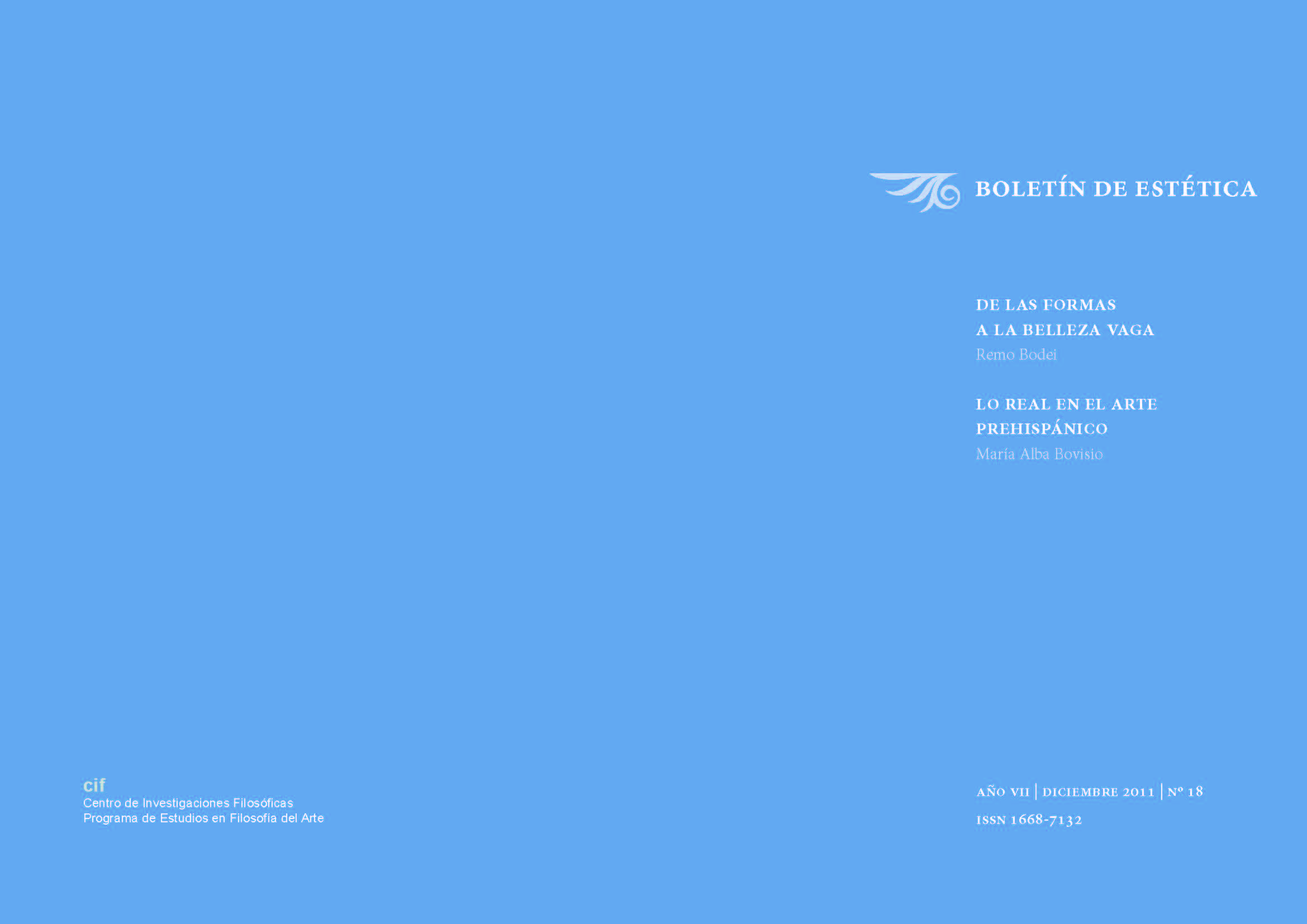
Abstract
If from Pitagoras and on, beauty was marked by the ideas of harmony, symmetry, proportion -which we still find in poetry's metrics and in musicand the sensible and the intelligible translate one another, with Plato, absolute beauty can only be aprehended by the mind. Both beauty paradigms break into crisis between the XVI and the XVII centuries when taste, as a subjective sense, substitutes the conception of calculable beauty in art. That is when there is a turn from the beautiful, good and true to the relation between beauty and time and eternity. Beauty moves away from the sensible, but to conserve its quintessence and its durability, guaranteed by those forms which defies becoming. With Baumgarten, aesthetics are reconducted to sensation. Aesthetical knowledge is the knowledge of 'vague', nondefinible, changing beauty, for it is mobile without sacrifying its own form. The concept of 'vague' has lost currency, although the option is, for many artists, to use techniques of the indetermined. Does the sensible and emotional component of this beauty lead to a specific kind of knowledge? Beauty is also knowledge: it leads us to the ineffable, that is nothing but a coincidence with "common places".